
 Tiếng Việt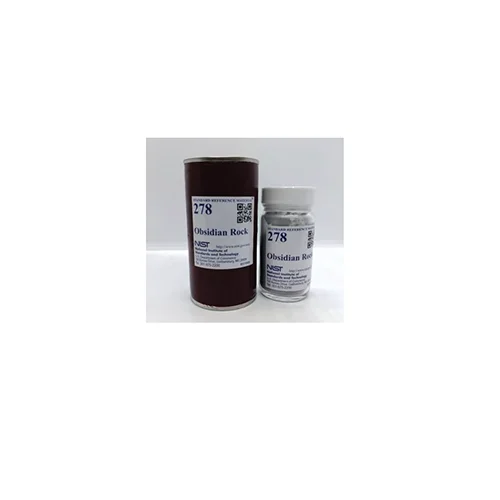
Application
Obsidian rock standard reference material (SRM) is intended for assessing the precision of both analytical methods and instruments employed in analyzing geological materials.
Features and Benefits
Available with a certificate documenting NIST-certified values of constituents in the obsidian rock, these values were determined through either a definitive method, reference method, or two or more analytical methods.
Information values of the constituents are determined by single or non-reference method.
General description
It is a finely powdered obstian rock, derived from Clear Lake, Newberry Crater, Oregon.
SRM 278_cert
SRM 278_SDS
Other Notes
Certified for the analytes listed below.
Aluminium dioxide (Al2O3), Calcium oxide (CaO), Iron(II) oxide (FeO), Iron(III) oxide (Fe2O3), Potassium oxide (K2O), Manganese oxide (MnO), Sodium oxide (Na2O), Phosphorus pentoxide (P2O5), Silicon dioxide (SiO2), Titanium dioxide (TiO2), Copper (Cu), Nickel (Ni), Rubidium (Rb), Strontium (Sr), Thorium (Th), Thallium (Tl), Uranium (U), Lead (Pb)
Reference/Informational value is provided for the following analytes.
Carbon (C), Carbon dioxide (CO2), Fluorine (F), Magnesium oxide (MgO), Barium (Ba), Boron (B), Cerium (Ce), Cobalt (Co), Chromium (Cr), Caesium (Cs), Europium (Eu), Gadolinium (Gd), Hofnium (Hf), Lutetium (Lu), Antimony (Sb), Scandium (Sc), Samarium (Sm), Tantalum (Ta), Terbium (Tb), Ytterbium (Yb), Zinc (Zn)
See certificate for values and more details at nist.gov/SRM.
Legal Information
NIST is a registered trademark of National Institute of Standards and Technology
SRM is a registered trademark of National Institute of Standards and Technology