
 Tiếng Việt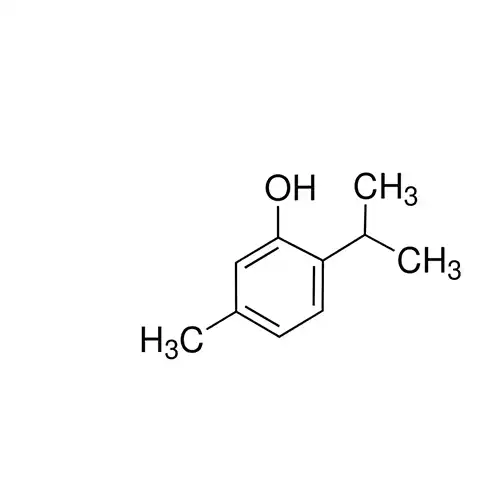
Application
Thymol has been used as certified reference material for the quantification of the analyte in essential oil from the leaves of Mentha longifolia Huds. (Lamiaceae)[1] and Mentha spicata L. (Lamiaceae)[2] using gas chromatography coupled to mass spectrometry (GC-MS).
General description
This certified reference material (CRM) is produced and certified in accordance with ISO/IEC 17025 and ISO 17034. This CRM is traceable to primary material from an NMI, e.g. NIST or NMIJ.
Certified content by quantitative NMR incl. uncertainty and expiry date are given on the certificate.
Download your certificate at: http://www.sigma-aldrich.com.
Check out our entire range of quantitative NMR standards (qNMR standards)
This certified reference material (CRM) is produced in accordance with ISO 17034 and characterized in accordance with ISO/IEC 17025. This CRM is traceable to SI unit kg and measured against primary material from a National Metrology Institute (NMI), e.g. NIST.
Please visit ISO certificates and Site Quality Self-Assessments to access the current certificates of accreditation.
Search & download your certificate here.
Thymol, a phenolic monoterpene derivative of cymene and an isomer of carvacrol, is a common constituent of the essential oils, derived from Thymus and Origanum plants.[3] It is a flavoring compound and its content is directly proportional to the characteristic flavor and quality of thyme and ajwain essential oils.[4] Thymol finds a variety of applications in pharmaceuticals, cosmetics, and the food industry.[5]
Other Notes
Check out ChemisTwin, our brand new online portal for identity confirmation of NMR spectra. A feature for quantitative NMR is in development. Learn more or reach out to us for a free trial.
This compound is commonly found in plants of the genus: ginkgo thymus
Legal Information
TraceCERT is a registered trademark of Merck KGaA, Darmstadt, Germany