
 Tiếng Việt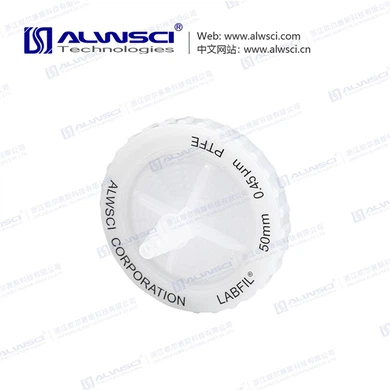
| Product Name | 50mm Vent Filter | ||
| Material | PTFE/PES/NY/PVDF… | ||
| Pore Size | 0.22μm/ 0.45μm | ||
| Diameter | 50mm | ||
| Housing | Polypropylene | ||
| Filtration Area | ≥17.2 cm2 | ||
| Application | Maintain sterile ventilation of the system to prevent contamination | ||
1) Description
50mm vent filters are commonly found in biological laboratories, pharmaceutical equipment, incubators, fermentation tanks, liquid storage tanks and other systems. Their main function is to prevent microorganisms and particles from entering the equipment or container when the system is “breathing” or ventilating, thereby maintaining a sterile or clean environment inside the system.
2) Features
Gas, vent or air filters containing hydrophobic membranes are used as vents throughout biomanufacturing to maintain near-normal pressures in process tanks and closed systems. These filters prevent the ingress of foreign microorganisms and the release of product aerosols into the environment.
Maintaining a Sterile Environment
Choosing the right hydrophobic media permeable vent can help maintain a sterile environment by preventing water and aerosols from entering sensitive cell and tissue culture vessels. When selecting a permeable filter, consider not only the filter type but also the size of the unit and typical airflow.
Protecting Instrumentation
Particulate matter and microbial contamination can damage sensitive instrumentation. Vents can be used in-line to remove particulate matter from air or gas delivered to instrumentation. They are also suitable for biocontainment of vacuum sources, providing air/gas for flushing instruments and cleaning components.
Protecting Vacuum Systems
Vents can be used as part of standard operating procedures for vacuum systems. Using a vent containing hydrophobic media between the vacuum source and receiving vessel protects the vacuum pump and internal vacuum lines from liquid ingress and prevents damage to valves and pump components from aqueous liquids.
3) Usage Scenarios and Methods
1. Incubator or CO₂ incubator:
Installed at the gas inlet and outlet to filter CO₂ or air to prevent microorganisms from entering the box.
2. Liquid storage tank or IV bag:
During the liquid extraction process, air needs to enter the container to balance the pressure. The filter is installed at the vent to prevent contaminated air from entering.
3. Fermenter or bioreactor:
Installed at the gas inlet and outlet interface, or the breathing valve on the top of the tank to ensure that no contamination is introduced during ventilation.
4. Pharmaceutical or laboratory filling system:
Used for filtering before gas discharge or input to prevent sample contamination.Installation and precautions
• Installation method: It can be directly inserted into the pipeline, interface or threaded joint, paying attention to the direction (usually with an arrow to indicate the flow direction).
• Replacement cycle: Depends on the frequency of use and air quality. It is usually recommended to replace it regularly (such as monthly or batch use).
• Avoid blockage: If poor ventilation or abnormal pressure is found, check whether it is blocked or failed.