
 Tiếng Việt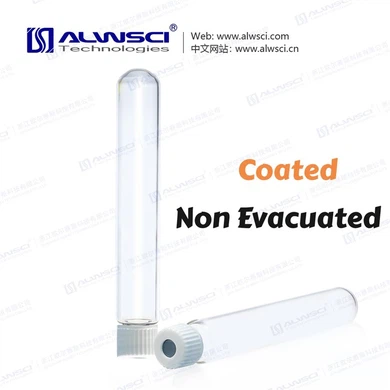
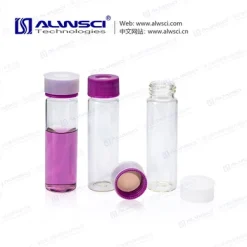
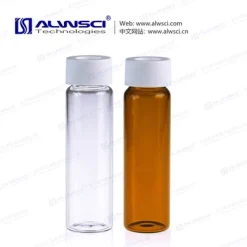
| Product Name | ALWSCI® 12ML Breath Testing Vial – Coated – Non Evacuated |
| Volume | 12mL |
| Neck Type | Screw |
| Bottom | Flat Bottom |
| Vial Size | 15.5x101mm |
| Vial Treatment | Coated, Non Evacuated |
| Lable | Labelled, No Label |
| Cap Colors | White, Blue, Green, Yellow, Red, Light Blue, Purple, Customized |
| Certificate | CE certificate |
1) Description
ALWSCI® 12ML Breath Testing Vial, as a product of the breath testing series, is specially designed to solve the accuracy and reliability problems of breath testing. It allows you to collect breath test samples at home, which is convenient and fast, and protects your health.
Compared with traditional breath test sample collection products, Our 12ml Breath Vials ensure high-quality breath samples with its precision design and controllable sampling characteristics; it is suitable for various gas detection instruments, has good sealing performance and is free of impurities . It can effectively prevent the movement of the vial cap during heating and sampling; at the same time, 12ml breath sampling tube is suitable for various types of breath tests such as hydrogen breath test, methane test, fructose test, etc. and the preservation of breath mass spectrometers for various gases to be measured.
2) Features
▶ Coated gives people a clear instructions without interfering with the analysis.
▶ The material of vial is borosilicate glass and cap is high-quality polypropylene.
▶ Butyl rubber septa have have good puncture resistance and sealing properties.
▶ Cap color can be customized accordingly.
▶ Broad analytical instrument compatibility, compatible with most breath sample analysis instruments on the market.
3) Application
ALWSCI® 12 mL Breath Testing Vial was developed to support more accurate medical diagnostics, scientific research, and environmental monitoring.
It has become a trusted solution for laboratories, pharmaceutical test centers, research institutes, and gastroenterology units worldwide.
1. Medical Diagnostics
ALWSCI Breath Vials are widely used in 13C Urea Breath Test (UBT) kits for the non-invasive detection of Helicobacter pylori infection.
They are also compatible with 14C Urea Breath Tests (PYtest) and SIBO breath testing protocols based on lactulose, glucose, or fructose substrates.
The vials ensure consistent sample integrity and airtight storage-essential for accurate isotope ratio analysis and clinical reliability.
Their precision and flexibility make them ideal for hospitals, diagnostic laboratories, and breath-test kit manufacturers seeking dependable collection containers for standardized workflows.
2. Scientific and Clinical Research
Researchers use the 12 mL Breath Testing Vial to explore metabolic pathways, volatile biomarkers, and isotopic tracers in human and environmental breath studies.
These vials enable reproducible sample capture for 13C or 14C labeling experiments, VOC profiling, and metabolomic studies.
They are also utilized in pharmaceutical and nutrition research to monitor drug metabolism and gut microbiome activity via breath signature analysis.
3. Environmental and Gas Sampling
Beyond clinical use, ALWSCI vials are used for collecting and analyzing gaseous samples such as CO₂, CH₄, and N₂O in environmental and climate research.
The borosilicate glass construction ensures low gas adsorption and stable long-term storage, making them suitable for both field sampling and laboratory testing.
4) User Guide
Open the Vial: Carefully remove the cap. Avoid touching the inner rim to prevent contamination.
Insert the Straw: Insert the designated straw into the vial until the tip reaches the bottom.
Prepare for Sampling: Take 2–3 deep breaths to clear residual air from the lungs.
Collect the Breath Sample: On the final exhalation, gently blow into the straw while gradually withdrawing it from the vial. This ensures the full sample is delivered throughout the internal volume.
Seal the Vial: Immediately recap the vial. Ensure a secure, airtight closure-do not overtighten. Proper sealing is critical to prevent sample loss or contamination.
(During sampling, condensation may appear on the inner wall-this is normal and indicates sufficient sample volume. This visual cue helps confirm proper sample collection without affecting downstream analysis.)