
 Tiếng Việt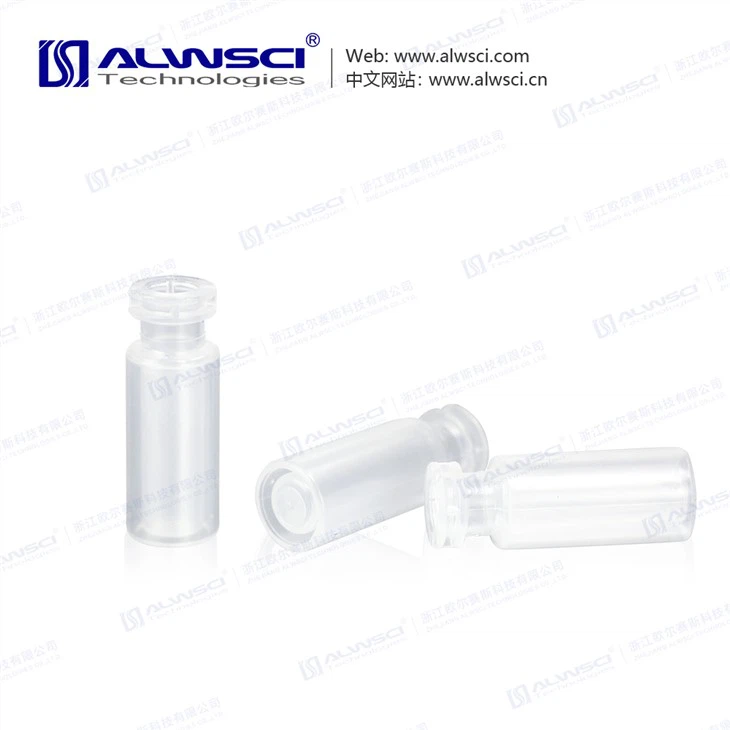
1) Description
The use of PP (polypropylene) vials and perforated caps in the laboratory offers some unique advantages over glass vials, especially in certain applications such as ion chromatography. These advantages include chemical stability, heat resistance, impact resistance and cost-effectiveness. PP material has good chemical stability and can withstand corrosion from a variety of chemicals, including acids, alkalis and most organic solvents. In addition, PP also has good heat resistance and can be used at higher temperatures without deformation.
Chemical stability: Ion chromatography involves a variety of chemical reagents and sample solutions. Due to its excellent chemical inertness, PP vials can reduce sample contamination or degradation that may be caused by the sample container.
High temperature resistance and impact resistance: PP vials have good high temperature resistance and excellent impact resistance, which makes them more stable and safe during high temperature sample processing and intra-laboratory transportation.
Cost-effectiveness: Compared to glass vials, PP vials are generally less expensive, providing a cost-effective solution for laboratories.
Applicability: For some sensitive ion chromatography analyses, glass containers may release trace amounts of ions, which may interfere with experimental results. Using PP vials can avoid such problems and ensure the accuracy of analysis.
2) Application
Ion Chromatography: In ion chromatography analysis, used to store and process samples and standard solutions. PP vials can prevent trace ion contamination that may be caused by glass vials.
High-Performance Liquid Chromatography (HPLC): For storage of solvents and samples, especially in automatic sampling systems, the PP open-hole cover facilitates the automatic addition of samples.
Sample Preparation: used to hold the reaction solution during sample pretreatment. The chemical resistance and temperature resistance of PP ensure safe use under different chemical reactions and conditions.
Sample Storage: used to store chemical reagents, solutions, biological samples, etc., especially those samples that have special requirements for container materials, such as acids, alkalis, salt solutions, etc.
3)Features
▶ Polypropylene vials, translucent and chemically resistant. They are the vials of choice for pH sensitive samples, sodium or heavy metal analyses.
▶ Polypropylene vials are preferred in applications where there is a concern that compound or molecule may stick to a polar glass surface. It is a cost effective alternative to glass.
▶ Polypropylene vials can contain sample volumes up to 700 μL while leaving minimum residual volumes of less than 3 μL.
▶ Specialized for pH-sensitive and aqueous samples.
▶ With good chemical resistance.