
 Tiếng Việt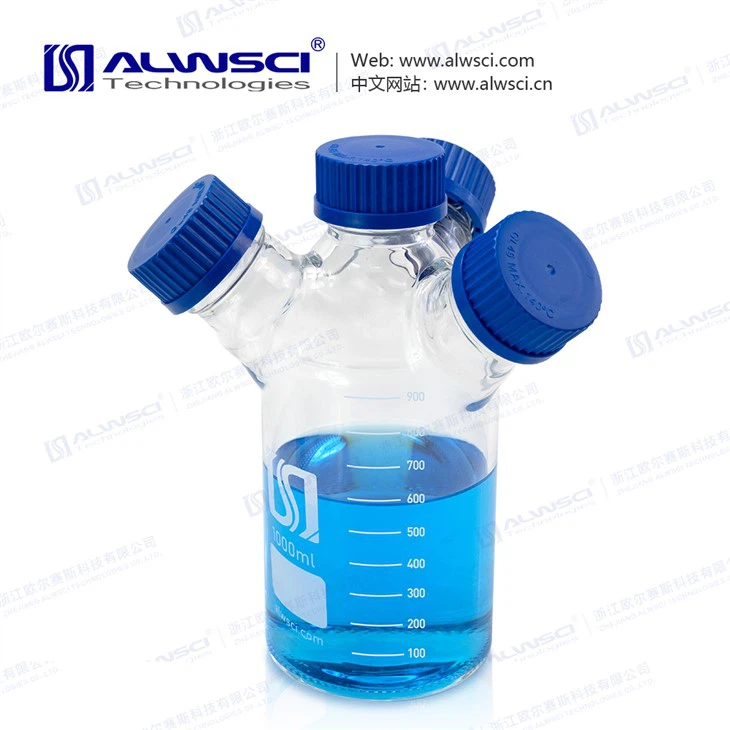
1) Description
In many LC workflows, improperly sealed solvent bottles pose significant risks-ranging from the release of toxic vapors to operational downtime due to air being drawn into the chromatography system. This multi-neck borosilicate glass bottle addresses these challenges at the structural level by offering versatile connectivity through multiple GL45 side necks. This allows for the concurrent routing of solvent lines, filters, and vent lines without crowding or compromise.
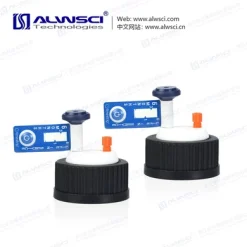
While the bottle itself is not a sealed system, it is engineered to seamlessly integrate with our GL45 safety caps, forming a closed solvent delivery system. This integrated solution minimizes vapor release, secures internal filters in place, and maintains consistent solvent flow-ensuring optimal performance and improved laboratory safety.
2)Features
▶ Multi-Neck GL45 Configuration
Three side necks and one central opening provide ample space for organizing multiple tubing and filter setups.
▶ High-Purity Borosilicate 3.3 Glass
Exceptional chemical resistance and thermal durability, compatible with a wide range of HPLC solvents.
▶ Enhanced Workflow Compatibility
Easy insertion and removal of solvent lines, reducing downtime and technician handling errors.
▶ Seamless Integration with Safety Caps
Fully compatible with our GL45 safety caps to build a fully enclosed solvent delivery system.
▶ Ease of Use
Simplified solvent line installation and removal reduce handling errors and training requirements.
▶ Multi-Port Ergonomic Cap
Facilitates organized routing of multiple solvent lines.
3) Application
- High-Performance Liquid Chromatography (HPLC)
- UHPLC workflows requiring high solvent purity
- Pharmaceutical, environmental, and food safety labs
- GLP/GMP-compliant laboratory environments
- Automated LC systems with frequent solvent switching
4) FAQ
Q1: What is a Multi-Neck HPLC Reagent Bottle?
A Multi-Neck HPLC Reagent Bottle is a solvent bottle designed with multiple openings (necks), allowing simultaneous connections for multiple solvent lines, degassing filters, or venting systems. It’s commonly used in HPLC/UPLC systems for solvent supply and waste collection, improving convenience, safety, and workflow efficiency.
Q2: What is the difference between a multi-neck and a standard HPLC bottle?
A standard HPLC bottle has a single neck, suitable for one solvent line. In contrast, a multi-neck bottle allows multiple connections, supporting multi-solvent gradients, parallel systems, or simultaneous solvent supply and venting, reducing contamination and operational complexity.
Q3: How many necks does a Multi-Neck HPLC Reagent Bottle typically have?
Common configurations include 2-neck, 3-neck, and 4-neck bottles.
Each neck can be used for:
Solvent inlet tubing
Degassing or venting
Sensor insertion (e.g., solvent level sensor)
Spare connection for maintenance or additional lines
Q4: What materials are available for Multi-Neck HPLC Bottles?
Borosilicate glass: Excellent chemical resistance, ideal for most organic solvents.
Amber glass: Protects light-sensitive solvents
Q5: What are the main applications of Multi-Neck HPLC Reagent Bottles?
They are widely used for:
Mobile phase solvent supply
Waste solvent collection
Solvent mixing and degassing
Gradient elution systems
Parallel analytical setups
Q6: Can I use one bottle for both solvent supply and waste collection?
No. It’s recommended to use separate bottles for supply and waste to avoid contamination.
Q7: How to connect tubing to a Multi-Neck Bottle?
Use compatible GL caps and connectors (e.g. PEEK fittings) to ensure airtight seals. Each neck can be fitted with a specific adapter depending on function (inlet, vent, filter).
Q8: How to clean and maintain a Multi-Neck Bottle?
Rinse with appropriate solvent after each use.
Use bottle brushes for inner cleaning.
Dry completely before refilling.
Inspect seals and caps regularly for wear.
Q9: What accessories are recommended?
GL45 caps with multiple ports
PEEK/PTFE fittings
Solvent filters and degassers
Level sensors for solvent monitoring
Q10: How to avoid solvent evaporation or contamination?
Use airtight GL caps and PTFE-lined seals.
Ensure all connections are properly fitted and closed when not in use.
Q11: Can different solvents be stored in one bottle simultaneously?
No. Each bottle should be used for a single solvent type to prevent cross-contamination or chemical reaction.