
 Tiếng Việt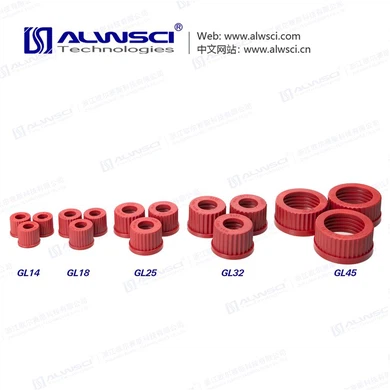
1) Description
PBT Closed /Open Top Cap commonly used in laboratory environments. It is made from PBT (polybutylene terephthalate) material is designed to fit tightly into laboratory bottles with GL threads. Known for their high-temperature resistance, chemical stability and mechanical strength, are ideal for sealing and protecting bottle contents.
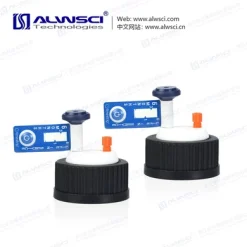
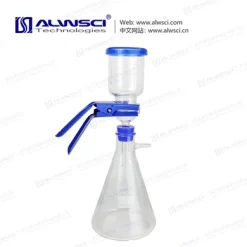
The closed cap provides a tight, leak-resistant closure, while the open cap is used with laboratory glass instruments, such as washing bottles, filter bottles, culture medium bottles.
2) Application
Design features of such caps include a mouth that accommodates GL45 threads and may have a textured surface for easier gripping. They are often used to store chemical reagents, culture media, sample solutions, etc., especially when it is necessary to ensure that the contents are protected from external contamination. Due to its excellent sealing properties and durability, GL45 closed caps are very common in a variety of laboratory and research environments.
The open top cap version is designed for laboratory glassware applications, such as gas washing bottles, filtration bottles, and media bottles. It allows for the attachment of tubes, connectors, or other accessories to facilitate controlled gas flow, liquid filtration, or media preparation.
3)Features
▶ High Temperature Resistance:
PBT Caps can withstand higher temperatures, which is especially important for laboratory containers that need to be disinfected or sterilized at high temperatures.
PP Caps can withstand certain high temperatures, but their heat resistance is relatively limited. It may deform or lose mechanical strength during continued exposure to high temperatures (usually around 100°C). Therefore, GL 45 PP lids are suitable for general laboratory temperatures, but caution should be used when using them in high temperature environments.
▶ Chemical Stability:
GL45 Closed Top PBT Cap has good resistance to many chemicals, including acids, alkalis, and some organic solvents, which helps prevent chemical corrosion and material degradation.
PP Caps have good chemical inertness and can resist the attack of most acids, alkalis and organic solvents. This makes GL 45 PP lids suitable for storing a wide range of chemicals, but may be less stable to certain solvents (such as strong oxidizers).
▶ Mechanical Strength:
It has good mechanical strength and toughness and can withstand the impact and pressure in daily use to ensure the sealing of the container.
PP Caps have good tear strength and impact resistance, which means that GL 45 PP lids can withstand the ordinary impacts and pressures of everyday use, but may break or deform under extreme force.
▶ Dimensional Stability:
PBT is able to maintain good dimensional stability in environments with changing temperatures and humidity, which is very important to ensure long-term sealing.
Under normal temperature and chemical conditions, polypropylene maintains good dimensional stability, which is important to ensure a sealing fit between the cap and bottle neck.
▶ Low Water Absorption:
PBT Cap has low water absorption, which means it is not easily deformed in humid environments, maintaining sealing and integrity.
PP Caps have very low water absorption, which means that GL 45 PP lids will not swell or deform as they absorb moisture, which is crucial to maintaining a tight seal and chemical stability.
▶ Aging Resistance:
PBT Cap has high resistance to light and oxidation, which is beneficial to extending the service life of the product.
Although polypropylene has some sensitivity to oxidation and UV radiation, overall GL 45 PP lids have good aging resistance under normal conditions of use.