

 Tiếng Việt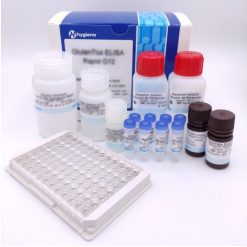
AlerTox ELISA Beta-Lactoglobulin
- Cow’s milk (Bos taurus) and dairy products are fundamental components of the human diet. Milk from other species such as goats, sheep, and buffalo is also a common source of milk for humans in certain geographical regions.
- Milk allergy can manifest with a variety of symptoms, ranging from mild oral allergy or skin rash to severe, life-threatening systemic reactions, namely anaphylaxis or bronchial asthma (IgE- or IgG-mediated).
- Milk protein allergy can be clinically distinguished from lactose intolerance caused by lactase deficiency.
- Milk allergy is one of the most common food allergies, particularly in infants and young children, affecting 0.5%–5% of the population across different age groups and geographical regions.
- AlerTox ELISA Beta-Lactoglobulin is a quantitative ELISA kit for the detection of BLG antigen in food, kitchens, and manufacturing facilities.
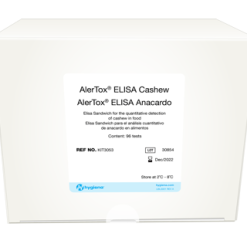
AlerTox ELISA Cashew
- Principle: Quantitative Sandwich ELISA.
- Plate Format: 96-well ELISA microplate (96 reactions).
- Assay Time: Approximately 60 minutes.
- Sample Preparation: Common extraction protocol compatible with multiple AlerTox® ELISA kits.
- Limit of Detection (LOD): 0.2 ppm cashew protein.
- Quantification Range (LOQ): 2.0–50 ppm.
- Storage: Store at 2–8°C.
- Application: Quantitative determination of cashew protein in food ingredients and finished food products. Performance has been validated on a variety of food and beverage matrices.
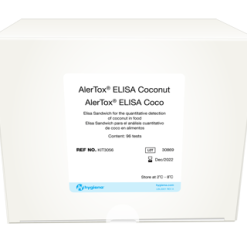
AlerTox ELISA Coconut
- Principle: Quantitative Sandwich ELISA.
- Plate Format: 96-well ELISA microplate (96 reactions).
- Assay Time: Approximately 60 minutes.
- Sample Preparation: Common extraction protocol compatible with multiple AlerTox® ELISA kits.
- Limit of Detection (LOD): 0.4 ppm coconut protein.
- Quantification Range (LOQ): 0.4–25 ppm.
- Storage: Store at 2–8°C.
- Application: Quantitative determination of coconut protein in food ingredients and finished food products.
AlerTox ELISA Fish
Fish protein is one of the major food allergens. Due to the increasing use of seafood in the food industry, consumers with fish allergies are at risk of severe or even fatal reactions caused by mislabeled or undeclared fish-derived ingredients in food products. Fish allergy can manifest with a variety of symptoms, ranging from mild oral allergic reactions or urticaria to severe, life-threatening systemic reactions, namely anaphylaxis or bronchial asthma.
AlerTox ELISA Fish is a rapid immunochromatographic assay for the qualitative detection of fish antigen in food products, kitchens, and food manufacturing facilities.
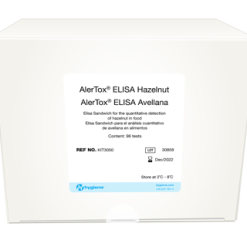
AlerTox ELISA Hazelnut
- Principle: Quantitative Sandwich ELISA.
- Plate Format: 96-well ELISA microplate (96 reactions).
- Assay Time: Approximately 60 minutes.
- Sample Preparation: Common extraction protocol compatible with multiple AlerTox ELISA kits.
- Limit of Detection (LOD): 0.07 ppm whole hazelnut.
- Quantification Range (LOQ): 1.0–40 ppm.
- Storage: 2–8°C.
- Application: Quantitative determination of hazelnut proteins in raw materials and finished food products. Validated for various food and beverage matrices including chocolate, cookies, cornflakes, and ice cream.

AlerTox ELISA Histamine
- Principle: Quantitative Competitive ELISA.
- Plate Format: 96-well ELISA microplate (96 reactions).
- Assay Time: Approximately 15 minutes (excluding sample preparation).
- Sample Preparation: Optimized extraction procedure for fish and wine samples.
- Limit of Detection (LOD): 2.5 ppm histamine.
- Quantification Range (LOQ): 2.5–50 ppm.
- Storage: Store at 2–8°C.
- Application: Quantitative determination of histamine in fish, seafood, wine, and other food products.

AlerTox ELISA Lupine
- Principle: Quantitative Sandwich ELISA.
- Plate Format: 96-well ELISA microplate (96 reactions).
- Assay Time: Approximately 60 minutes.
- Sample Preparation: Common extraction protocol compatible with multiple AlerTox® ELISA kits.
- Limit of Detection (LOD): 0.2 ppm lupine protein.
- Quantification Range (LOQ): 2–30 ppm.
- Storage: Store at 2–8°C.
- Application: Quantitative determination of lupine protein in food ingredients and finished food products.

AlerTox ELISA Macadamia
- Principle: Quantitative Sandwich ELISA.
- Plate Format: 96-well ELISA microplate (96 reactions).
- Assay Time: Approximately 90 minutes.
- Sample Preparation: Common extraction protocol compatible with multiple AlerTox® ELISA kits.
- Limit of Detection (LOD): 0.1 ppm macadamia protein.
- Quantification Range (LOQ): 1–25 ppm.
- Storage: Store at 2–8°C.
- Application: Quantitative determination of macadamia protein in food ingredients and finished food products.
AlerTox ELISA Milk (Casein & Beta-lactoglobulin)
- Principle: Quantitative Sandwich ELISA.
- Plate Format: 96-well ELISA microplate (96 reactions).
- Assay Time: Approximately 60 minutes.
- Sample Preparation: Dedicated extraction protocol for the simultaneous quantification of milk proteins (casein and β-lactoglobulin).
- Limit of Detection (LOD): 0.05 ppm milk protein.
- Quantification Range (LOQ): 0.5–10 ppm.
- Storage: Store at 2–8°C.
- Application: Quantitative determination of milk proteins (casein and β-lactoglobulin) in food ingredients, finished food products, and CIP rinse water.

AlerTox ELISA Pistachio
- Principle: Quantitative Sandwich ELISA.
- Plate Format: 96-well ELISA microplate (96 reactions).
- Assay Time: Approximately 60 minutes.
- Sample Preparation: Common extraction protocol compatible with multiple AlerTox® ELISA kits.
- Limit of Detection (LOD): 0.07 ppm pistachio protein.
- Quantification Range (LOQ): 1–25 ppm.
- Storage: Store at 2–8°C.
- Application: Quantitative determination of pistachio protein in food ingredients, finished food products, and CIP rinse water.
AlerTox ELISA Soy
- Soybean (Glycine max) is a member of the Fabaceae (also known as Leguminosae) family, which includes beans, peas, mung beans, alfalfa, and lupin.
- Soy allergy can cause a wide range of symptoms, from mild reactions such as oral allergy syndrome or urticaria (hives) to severe, life-threatening conditions including anaphylaxis and asthma. Soybean is also one of the most widely genetically modified crops and is among the least expensive sources of protein used in the food industry for ingredient supplementation and food adulteration. The prevalence of soy allergy is estimated to be approximately 0.1–0.2% across different populations, with most reported cases occurring in children.
- AlerTox Sticks Soy PLUS is a rapid lateral flow immunoassay designed for the qualitative detection of soy proteins in food products, food-contact surfaces, production equipment, and manufacturing environments. The test provides fast and reliable results, making it an effective tool for allergen monitoring and supporting food safety and HACCP programs.
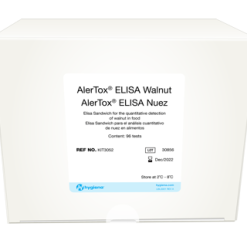
AlerTox ELISA Walnut
- Principle: Quantitative Sandwich ELISA.
- Plate Format: 96-well ELISA microplate (96 reactions).
- Assay Time: Approximately 60 minutes.
- Sample Preparation: Common extraction protocol compatible with 16 AlerTox® ELISA kits.
- Limit of Detection (LOD): 0.4 ppm walnut protein.
- Quantification Range (LOQ): 2–50 ppm.
- Storage: Store at 2–8°C.
- Application: Quantitative determination of walnut protein in food ingredients and finished food products. Performance has been validated on a variety of food matrices, including chocolate, cookies, ice cream, and breakfast cereals.
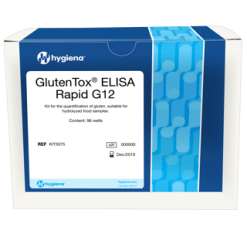
GlutenTox ELISA Rapid G12
- Principle: Quantitative Sandwich ELISA using proprietary G12 and A1 monoclonal antibodies targeting the immunotoxic 33-mer gluten peptide.
- Plate Format: 96-well ELISA microplate (96 reactions).
- Assay Time: Approximately 60 minutes.
- Sample Preparation: Rapid extraction using UGES extraction solution, suitable for a wide range of food and environmental samples.
- Limit of Detection (LOD): 0.4 ppm gluten.
- Quantification Range (LOQ): 1.2–200 ppm gluten.
- Storage: Store at 2–8°C.
- Application: Quantitative determination of gluten in raw materials, processed foods, and environmental samples. Detects gluten from wheat, barley, rye, and oats and supports gluten-free labeling compliance with FDA, Codex Alimentarius, and EU regulations.