

 Tiếng Việt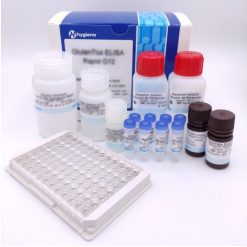
AlerTox ELISA Almond
Almond (Prunus dulcis) belongs to the Rosaceae family (the same family as apples, pears, peaches, cherries, plums, and apricots). However, almond allergy is classified as a tree nut allergy.
Almond allergy can manifest with a variety of symptoms, ranging from mild oral allergic reactions or urticaria to severe, life-threatening systemic reactions, namely anaphylaxis or bronchial asthma.
AlerTox Sticks Almond is an ELISA kit for the semi-quantitative detection of almond antigen in food products, kitchens, and food manufacturing facilities.
AlerTox ELISA Beta-Lactoglobulin
- Cow’s milk (Bos taurus) and dairy products are fundamental components of the human diet. Milk from other species such as goats, sheep, and buffalo is also a common source of milk for humans in certain geographical regions.
- Milk allergy can manifest with a variety of symptoms, ranging from mild oral allergy or skin rash to severe, life-threatening systemic reactions, namely anaphylaxis or bronchial asthma (IgE- or IgG-mediated).
- Milk protein allergy can be clinically distinguished from lactose intolerance caused by lactase deficiency.
- Milk allergy is one of the most common food allergies, particularly in infants and young children, affecting 0.5%–5% of the population across different age groups and geographical regions.
- AlerTox ELISA Beta-Lactoglobulin is a quantitative ELISA kit for the detection of BLG antigen in food, kitchens, and manufacturing facilities.
AlerTox ELISA Casein
Cow’s milk (Bos taurus) and dairy products are fundamental components of the human diet. Milk from other species such as goats, sheep, and buffalo is also a common source of milk for humans in certain geographical regions.
Milk allergy can manifest with a variety of symptoms, ranging from mild oral allergic reactions or skin rash to severe, life-threatening systemic reactions, namely anaphylaxis or bronchial asthma (IgE- or IgG-mediated). Milk protein allergy can be clinically distinguished from lactose intolerance caused by lactase deficiency.
Milk allergy is one of the most common food allergies, particularly in infants and young children, affecting 0.5%–5% of the population across different age groups and geographical regions.
AlerTox ELISA Casein is an ELISA kit for the detection of bovine milk casein (α, β, γ) in food products, kitchens, and food manufacturing facilities.
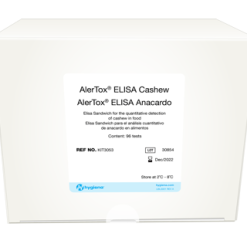
AlerTox ELISA Cashew
- Principle: Quantitative Sandwich ELISA.
- Plate Format: 96-well ELISA microplate (96 reactions).
- Assay Time: Approximately 60 minutes.
- Sample Preparation: Common extraction protocol compatible with multiple AlerTox® ELISA kits.
- Limit of Detection (LOD): 0.2 ppm cashew protein.
- Quantification Range (LOQ): 2.0–50 ppm.
- Storage: Store at 2–8°C.
- Application: Quantitative determination of cashew protein in food ingredients and finished food products. Performance has been validated on a variety of food and beverage matrices.
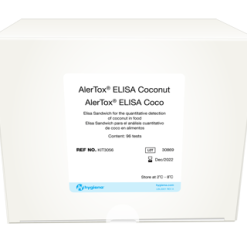
AlerTox ELISA Coconut
- Principle: Quantitative Sandwich ELISA.
- Plate Format: 96-well ELISA microplate (96 reactions).
- Assay Time: Approximately 60 minutes.
- Sample Preparation: Common extraction protocol compatible with multiple AlerTox® ELISA kits.
- Limit of Detection (LOD): 0.4 ppm coconut protein.
- Quantification Range (LOQ): 0.4–25 ppm.
- Storage: Store at 2–8°C.
- Application: Quantitative determination of coconut protein in food ingredients and finished food products.
AlerTox ELISA Crustacean
Crustaceans are among the most widely consumed seafood worldwide. In some countries, crustaceans and crustacean-derived products constitute an important part of the daily diet. Crustacean allergy can manifest with a variety of symptoms, ranging from mild oral allergic reactions or urticaria to severe, life-threatening systemic reactions, namely anaphylaxis or bronchial asthma. Crustacean allergy is among the top 10 food allergies in certain geographical regions, although no estimate of its global prevalence is available. The consumption of crustaceans is prohibited by certain religions.
AlerTox ELISA Crustacean is an ELISA kit for the quantitative detection of crustacean antigen in food products, kitchens, and food manufacturing facilities.
AlerTox ELISA Egg
Egg proteins are considered one of the major food allergens.
Egg allergy can cause severe and even life-threatening immune reactions, including anaphylaxis, acute bronchial asthma, severe atopic dermatitis, and gastroenteritis. Eggs are widely used in food products such as ice cream, noodles, pasta, sauces, and wine. Trace amounts of egg proteins may remain on food-contact surfaces used during food processing. Furthermore, some vaccines may contain small amounts of egg proteins, posing a potential risk to individuals with egg allergy.
AlerTox ELISA Egg is an ELISA kit for the quantitative detection of egg antigen in food products, kitchens, and food manufacturing facilities.
AlerTox ELISA Fish
Fish protein is one of the major food allergens. Due to the increasing use of seafood in the food industry, consumers with fish allergies are at risk of severe or even fatal reactions caused by mislabeled or undeclared fish-derived ingredients in food products. Fish allergy can manifest with a variety of symptoms, ranging from mild oral allergic reactions or urticaria to severe, life-threatening systemic reactions, namely anaphylaxis or bronchial asthma.
AlerTox ELISA Fish is a rapid immunochromatographic assay for the qualitative detection of fish antigen in food products, kitchens, and food manufacturing facilities.
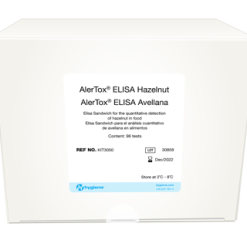
AlerTox ELISA Hazelnut
- Principle: Quantitative Sandwich ELISA.
- Plate Format: 96-well ELISA microplate (96 reactions).
- Assay Time: Approximately 60 minutes.
- Sample Preparation: Common extraction protocol compatible with multiple AlerTox ELISA kits.
- Limit of Detection (LOD): 0.07 ppm whole hazelnut.
- Quantification Range (LOQ): 1.0–40 ppm.
- Storage: 2–8°C.
- Application: Quantitative determination of hazelnut proteins in raw materials and finished food products. Validated for various food and beverage matrices including chocolate, cookies, cornflakes, and ice cream.

AlerTox ELISA Histamine
- Principle: Quantitative Competitive ELISA.
- Plate Format: 96-well ELISA microplate (96 reactions).
- Assay Time: Approximately 15 minutes (excluding sample preparation).
- Sample Preparation: Optimized extraction procedure for fish and wine samples.
- Limit of Detection (LOD): 2.5 ppm histamine.
- Quantification Range (LOQ): 2.5–50 ppm.
- Storage: Store at 2–8°C.
- Application: Quantitative determination of histamine in fish, seafood, wine, and other food products.

AlerTox ELISA Lupine
- Principle: Quantitative Sandwich ELISA.
- Plate Format: 96-well ELISA microplate (96 reactions).
- Assay Time: Approximately 60 minutes.
- Sample Preparation: Common extraction protocol compatible with multiple AlerTox® ELISA kits.
- Limit of Detection (LOD): 0.2 ppm lupine protein.
- Quantification Range (LOQ): 2–30 ppm.
- Storage: Store at 2–8°C.
- Application: Quantitative determination of lupine protein in food ingredients and finished food products.

AlerTox ELISA Macadamia
- Principle: Quantitative Sandwich ELISA.
- Plate Format: 96-well ELISA microplate (96 reactions).
- Assay Time: Approximately 90 minutes.
- Sample Preparation: Common extraction protocol compatible with multiple AlerTox® ELISA kits.
- Limit of Detection (LOD): 0.1 ppm macadamia protein.
- Quantification Range (LOQ): 1–25 ppm.
- Storage: Store at 2–8°C.
- Application: Quantitative determination of macadamia protein in food ingredients and finished food products.
AlerTox ELISA Milk (Casein & Beta-lactoglobulin)
- Principle: Quantitative Sandwich ELISA.
- Plate Format: 96-well ELISA microplate (96 reactions).
- Assay Time: Approximately 60 minutes.
- Sample Preparation: Dedicated extraction protocol for the simultaneous quantification of milk proteins (casein and β-lactoglobulin).
- Limit of Detection (LOD): 0.05 ppm milk protein.
- Quantification Range (LOQ): 0.5–10 ppm.
- Storage: Store at 2–8°C.
- Application: Quantitative determination of milk proteins (casein and β-lactoglobulin) in food ingredients, finished food products, and CIP rinse water.
AlerTox ELISA Mustard
Mustard is a condiment made from the seeds of the mustard plant. Oriental mustard, also known as Chinese mustard or Jie Cai/Gai Choy (Sisymbrium orientale), is another member of the mustard family, as is wasabi (Eutrema japonicum).
Mustard allergy can manifest with a variety of symptoms, ranging from mild oral allergic reactions or urticaria to severe, life-threatening systemic reactions, namely anaphylaxis or bronchial asthma. Mustard allergy is one of the major food allergies in certain geographical regions, although no estimate of its global prevalence is available.
AlerTox Sticks Mustard Seeds is an ELISA kit for the quantitative detection of mustard antigen in food products and on environmental surfaces.
AlerTox ELISA Peanut
Peanut (Arachis hypogaea) is a legume belonging to the Fabaceae family (also known as Leguminosae), which includes beans, peas, green beans, alfalfa, and lupins.
Peanut allergy can manifest with a variety of symptoms, ranging from mild oral allergic reactions or urticaria to severe, life-threatening systemic reactions, namely anaphylaxis or bronchial asthma. Peanut-induced anaphylaxis is considered to have the highest fatality rate among all food allergies. Peanut allergy affects more than 0.5% of children in the general population.
AlerTox Sticks Peanut is an ELISA kit for the quantitative detection of peanut antigen in food products, kitchens, and food manufacturing facilities.

AlerTox ELISA Pistachio
- Principle: Quantitative Sandwich ELISA.
- Plate Format: 96-well ELISA microplate (96 reactions).
- Assay Time: Approximately 60 minutes.
- Sample Preparation: Common extraction protocol compatible with multiple AlerTox® ELISA kits.
- Limit of Detection (LOD): 0.07 ppm pistachio protein.
- Quantification Range (LOQ): 1–25 ppm.
- Storage: Store at 2–8°C.
- Application: Quantitative determination of pistachio protein in food ingredients, finished food products, and CIP rinse water.
AlerTox ELISA Sesame
Sesame is an herbaceous plant belonging to the Pedaliaceae family. The most common species are Sesamum indicum (white sesame) and Sesamum radiatum (black sesame).
Allergy to sesame seeds and sesame-derived products can manifest with a variety of symptoms, ranging from mild oral allergic reactions or urticaria to severe, life-threatening systemic reactions, namely anaphylaxis or bronchial asthma. Sesame allergy is estimated to affect 0.1%–0.9% of the population and is more common in Asian countries. Sensitive individuals may exhibit cross-reactivity with peanuts, walnuts, hazelnuts, rye, and poppy seeds.
AlerTox ELISA Sesame is an ELISA kit for the quantitative detection of sesame antigen in food products, kitchens, and food manufacturing facilities.
AlerTox ELISA Soy
- Soybean (Glycine max) is a member of the Fabaceae (also known as Leguminosae) family, which includes beans, peas, mung beans, alfalfa, and lupin.
- Soy allergy can cause a wide range of symptoms, from mild reactions such as oral allergy syndrome or urticaria (hives) to severe, life-threatening conditions including anaphylaxis and asthma. Soybean is also one of the most widely genetically modified crops and is among the least expensive sources of protein used in the food industry for ingredient supplementation and food adulteration. The prevalence of soy allergy is estimated to be approximately 0.1–0.2% across different populations, with most reported cases occurring in children.
- AlerTox Sticks Soy PLUS is a rapid lateral flow immunoassay designed for the qualitative detection of soy proteins in food products, food-contact surfaces, production equipment, and manufacturing environments. The test provides fast and reliable results, making it an effective tool for allergen monitoring and supporting food safety and HACCP programs.
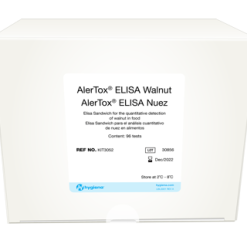
AlerTox ELISA Walnut
- Principle: Quantitative Sandwich ELISA.
- Plate Format: 96-well ELISA microplate (96 reactions).
- Assay Time: Approximately 60 minutes.
- Sample Preparation: Common extraction protocol compatible with 16 AlerTox® ELISA kits.
- Limit of Detection (LOD): 0.4 ppm walnut protein.
- Quantification Range (LOQ): 2–50 ppm.
- Storage: Store at 2–8°C.
- Application: Quantitative determination of walnut protein in food ingredients and finished food products. Performance has been validated on a variety of food matrices, including chocolate, cookies, ice cream, and breakfast cereals.
AlerTox Sticks Almond
Almond (Prunus dulcis) belongs to the Rosaceae family (the same family as apples, pears, peaches, cherries, plums, and apricots). However, almond allergy is classified as a tree nut allergy.
Almond allergy can manifest with a variety of symptoms, ranging from mild oral allergic reactions or urticaria to severe, life-threatening systemic reactions, including anaphylaxis or bronchial asthma.
AlerTox Sticks Almond is a rapid immunochromatographic assay for the qualitative detection of almond antigen in food products, kitchens, and food manufacturing facilities.
Assay Time: 10 minutes.
AlerTox Sticks Fish
Fish protein is considered one of the major food allergens. Due to the increasing use of seafood in the food industry, consumers with fish allergies are at risk of severe reactions or even life-threatening events caused by fish-derived products that are mislabelled or undeclared. Fish allergy can manifest with a variety of symptoms, ranging from mild oral allergic reactions or urticaria to severe, life-threatening systemic reactions, namely anaphylaxis or bronchial asthma.
AlerTox Sticks Fish is a rapid immunochromatographic assay for the qualitative detection of fish antigen in food products, kitchens, and food manufacturing facilities.
Assay Time: 10 minutes.
AlerTox Sticks Hazelnut
- Hazelnuts are the edible nuts of the hazel tree and include nuts derived from species of the Corylus genus, particularly Corylus avellana. Hazelnut allergy can manifest with a wide range of symptoms, from mild oral allergic reactions or urticaria to severe, life-threatening systemic reactions, including anaphylaxis or bronchial asthma. Hazelnut allergy is one of the most common tree nut allergies, with the majority of reported cases occurring in children. Under the Food Allergen Labeling and Consumer Protection Act (FALCPA), the presence of hazelnuts in food products must be declared on product labels.
- AlerTox Sticks Hazelnut is a rapid immunochromatographic assay for the qualitative detection of hazelnut allergen in food products, kitchens, and food manufacturing facilities.
- Assay Time: 10 minutes.
AlerTox Sticks Mustard Seeds
- Mustard is a condiment made from the seeds of the mustard plant, including white or yellow mustard (Sinapis alba), brown or Indian mustard (Brassica juncea), and black mustard (Brassica nigra). Oriental mustard, also known as Chinese mustard or Jie Cai/Gai Choy (Sisymbrium directionale), is another member of the mustard family, as is wasabi (Eutrema japonicum).
- Mustard allergy can manifest with a variety of symptoms, ranging from mild oral allergic reactions or urticaria to severe, life-threatening systemic reactions, namely anaphylaxis or bronchial asthma. Mustard allergy is considered one of the major food allergies in certain geographical regions, although no reliable estimate of its global prevalence is available.
- AlerTox Sticks Mustard Seeds is a rapid immunochromatographic assay for the qualitative detection of mustard antigen in food products and on environmental surfaces.
- Assay Time: 10 minutes.
AlerTox Sticks Peanut
Peanut (Arachis hypogaea) is a legume belonging to the Fabaceae family (also known as Leguminosae), which includes beans, peas, green beans, alfalfa, and lupins.
Peanut allergy can manifest with a variety of symptoms, ranging from mild oral allergic reactions or urticaria to severe, life-threatening systemic reactions, namely anaphylaxis or bronchial asthma. Anaphylaxis caused by peanuts is considered to have the highest fatality rate among all food allergies. Peanut allergy affects more than 0.5% of children in the general population.
AlerTox Sticks Peanut is a rapid immunochromatographic assay for the qualitative detection of peanut antigen in food products and on environmental surfaces.
Assay Time: 10 minutes.
AlerTox Sticks Soy PLUS
Soybean (Glycine max) is a legume belonging to the Fabaceae family (also known as Leguminosae), which includes beans, peas, green beans, alfalfa, and lupins.
Soy allergy can manifest with a variety of symptoms, ranging from mild oral allergic reactions or urticaria to severe, life-threatening systemic reactions, namely anaphylaxis or bronchial asthma. Soybean is also one of the most frequently genetically modified crops and one of the least expensive sources of protein used in the food industry for food formulation and adulteration. The estimated prevalence of soy allergy is approximately 0.1%–0.2% across different populations, with most reported cases occurring in children.
AlerTox Sticks Soy PLUS is a rapid immunochromatographic assay for the qualitative detection of soy antigen in food products, kitchens, and food manufacturing facilities.
Assay Time: 10 minutes.
AlerTox Sticks Total Milk
- Cow’s milk and dairy products are an important part of human nutrition. Milk from other animal species is also widely consumed in many regions of the world. Milk allergy can present with a wide range of symptoms, from mild oral allergic reactions or urticaria to severe, life-threatening systemic reactions, including anaphylaxis or bronchial asthma. Clinically, milk protein allergy can be distinguished from lactose intolerance, which results from a deficiency of the enzyme lactase.
- AlerTox Sticks Total Milk is a rapid immunochromatographic assay for the qualitative detection of total milk proteins in food products, kitchens, and food manufacturing facilities.
- Assay Time: 10 minutes.
AlerTox Sticks Walnut
Walnut (Juglans regia) is a tree nut belonging to the Juglandaceae family. Walnut allergy can manifest with a variety of symptoms, ranging from mild oral allergic reactions or urticaria to severe, life-threatening systemic reactions, including anaphylaxis or bronchial asthma. Walnut allergy is one of the most common tree nut allergies, with an estimated prevalence of 0.1%–1% in the general population.
AlerTox Sticks Walnut is a rapid immunochromatographic assay for the qualitative detection of walnut allergen in food products, kitchens, and food manufacturing facilities.
Assay Time: 10 minutes.
AlerTox® Sticks Casein
Cow’s milk (Bos taurus) and dairy products are a fundamental source of human nutrition. Milk from other species, such as goats, sheep, and buffalo, is also a common source of milk for human consumption in certain geographical regions.
Milk allergy can manifest with a variety of symptoms, ranging from mild oral allergic reactions or skin rashes to severe, life-threatening systemic reactions, namely anaphylaxis or bronchial asthma (IgE- or IgG-mediated responses).
Milk protein allergy can be clinically distinguished from lactose intolerance, which is caused by lactase enzyme deficiency.
Milk allergy is one of the most common food allergies, particularly among infants and young children, affecting 0.5%–5% of the population across different age groups and geographical regions.
AlerTox® Sticks Casein is a rapid test kit for the quantitative detection of casein antigen in food products, kitchens, and food manufacturing facilities.
Assay Time: 10 minutes.
AlerTox® Sticks Crustacean
Crustaceans are among the most commonly consumed types of seafood; in some countries, crustaceans and their derived products represent an important part of daily consumption. Crustacean allergy can manifest with a variety of symptoms, ranging from mild oral allergic reactions or urticaria to severe, life-threatening systemic reactions, namely anaphylaxis or bronchial asthma. Crustacean allergy is among the top 10 food allergies in some geographical regions, although there is no global prevalence estimate available. Consumption of crustaceans is prohibited by certain religions.
AlerTox® Sticks Crustacean is a rapid test kit for the quantitative detection of crustacean antigen in food products, kitchens, and food manufacturing facilities.
Assay Time: 10 minutes.
AlerTox® Sticks Egg
Egg protein is considered one of the major food allergens. Egg allergy can cause a wide range of symptoms, from mild oral allergic reactions or urticaria to severe, life-threatening systemic reactions, including anaphylaxis or bronchial asthma. Eggs are widely used in food products such as ice cream, noodles, pasta, sauces, and wine. Trace amounts of egg proteins may also remain on food-contact surfaces during food processing. Furthermore, certain vaccines may contain small amounts of egg proteins, posing a potential risk to individuals with egg allergy.
AlerTox® Sticks Egg is a rapid test kit for the quantitative detection of egg antigen in food products, kitchens, and food manufacturing facilities.
Assay Time: 10 minutes.

AlerTox® Sticks Egg (25 Tests)
- Principle: Qualitative Lateral Flow Immunochromatographic Assay.
- Test Format: Lateral flow test strip.
- Assay Time: Approximately 10 minutes.
- Sample Preparation: Simple extraction procedure suitable for food samples, rinse water, and environmental surface samples.
- Limit of Detection (LOD): 1.25 ppm ovalbumin.
- Storage: Store at 10–30°C.
- Application: Qualitative detection of ovalbumin (egg protein) in food products, CIP rinse water, and food contact surfaces for allergen cross-contamination monitoring.
AlerTox® Sticks Sesame
Sesame is an herbaceous plant belonging to the Pedaliaceae family. The most common species are Sesamum indicum (white sesame) and Sesamum radiatum (black sesame).
Allergy to sesame seeds and sesame-derived products can manifest with a variety of symptoms, ranging from mild oral allergic reactions or urticaria to severe, life-threatening systemic reactions, namely anaphylaxis or bronchial asthma. Sesame allergy is estimated to affect 0.1%–0.9% of the population and is more common in Asian countries. Sensitive individuals may exhibit cross-reactivity with peanuts, walnuts, hazelnuts, rye, and poppy seeds.
AlerTox Sticks Sesame is a rapid immunochromatographic assay for the qualitative detection of sesame antigen in food products and on environmental surfaces.
Assay Time: 10 minutes.

AlerTox® Sticks Total Milk (25 Tests)
- Principle: Qualitative Lateral Flow Immunochromatographic Assay.
- Test Format: Lateral flow test strip.
- Assay Time: Approximately 10 minutes.
- Sample Preparation: Simple extraction procedure suitable for food samples, CIP rinse water, and environmental surface samples.
- Limit of Detection (LOD): 1 ppm total milk protein (casein and β-lactoglobulin).
- Storage: Store at 10–30°C.
- Application: Qualitative detection of total milk proteins (casein and β-lactoglobulin) in food products, CIP rinse water, and food contact surfaces for allergen cross-contamination monitoring.
AlerTox® Sticks β-lactoglobulin
Cow’s milk (Bos taurus) and dairy products are a fundamental source of human nutrition. Milk from other species, such as goats, sheep, and buffalo, is also a common source of milk for human consumption in certain geographical regions.
Milk allergy can manifest with a variety of symptoms, ranging from mild oral allergic reactions or skin rashes to severe, life-threatening systemic reactions, namely anaphylaxis or bronchial asthma (IgE- or IgG-mediated responses).
Milk protein allergy can be clinically distinguished from lactose intolerance, which is caused by lactase enzyme deficiency.
Milk allergy is one of the most common food allergies, particularly among infants and young children, affecting 0.5%–5% of the population across different age groups and geographical regions.
AlerTox Beta-Lactoglobulin is a rapid test kit for the quantitative detection of BLG antigen in food products, kitchens, and food manufacturing facilities.
Assay Time: 10 minutes.
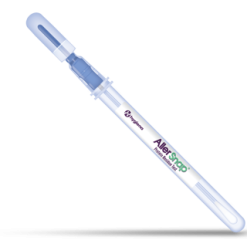
AllerSnap® High-Sensitivity Allergen Prevention Test
- Principle: Chromogenic Protein Residue Detection.
- Test Format: All-in-one surface protein swab.
- Assay Time: 15–30 minutes.
- Sample Preparation: Swab the cleaned surface, activate the reagent, and incubate at 37°C for 30 minutes or 55°C for 15 minutes.
- Limit of Detection (LOD): 3 µg protein on surfaces.
- Storage: Store at 2–25°C.
- Application: Rapid verification of surface cleanliness by detecting residual protein after cleaning, supporting allergen cross-contamination prevention programs in food production.

Chloramphenicol Residue ELISA Test Kit
Rapid ELISA Kit for Chloramphenicol Residue Testing is a biological immunoassay kit designed for the quantitative analysis of chloramphenicol and glucuronide in samples.
Samples: Honey, eggs, urine, water, milk, plasma, muscle (tissue), yogurt, and seafood.
Testing Time: 45 minutes
Packaging:
HU0050002 – 96 wells (12 strips x 8 wells).
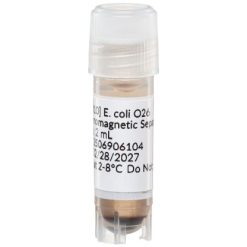
E. coli O26 Immunomagnetic Separation (IMS) Beads, 2 mL
Immunomagnetic separation beads designed for the rapid and selective concentration of Escherichia coli serogroup O26 to support confirmation on selective confirmation agars.
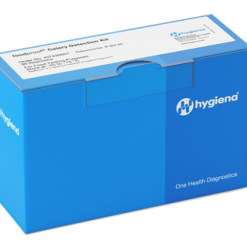
Foodproof Celery Detection Kit
- Principle: Qualitative real-time PCR for the detection of celery (Apium graveolens) DNA.
- Kit Format: Real-time PCR kit (64 reactions).
- Assay Time: Approximately 100 minutes (excluding DNA extraction).
- Sample Preparation: DNA is extracted from food samples using a suitable extraction method prior to real-time PCR analysis.
- Limit of Detection (LOD): 0.1 ppm celery DNA.
- Storage: Store at -15 to -25°C.
- Application: Qualitative detection of celery DNA in food products including spices, meat products, seasonings, bouillons, and sauces. The kit can also be used for quantitative analysis when combined with Allergen RM 800 reference material.

Foodproof Gluten Detection Kit
- Principle: Qualitative and quantitative real-time PCR for the detection of DNA from gluten-containing cereals.
- Kit Format: Real-time PCR kit (64 reactions).
- Assay Time: Approximately 100–115 minutes (excluding DNA extraction).
- Sample Preparation: DNA is extracted from food samples using a suitable DNA extraction method prior to real-time PCR analysis.
- Limit of Detection (LOD): 0.1–1 ppm gluten (depending on the food matrix).
- Storage: Store at -15 to -25°C.
- Application: Qualitative and quantitative detection of DNA from gluten-containing cereals including wheat, spelt, Khorasan wheat, rye, barley, and triticale in food products.
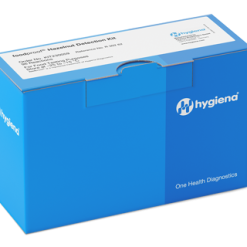
Foodproof Hazelnut Detection Kit
- Principle: Qualitative real-time PCR for the detection of hazelnut (Corylus avellana) DNA.
- Kit Format: Real-time PCR kit (64 reactions).
- Assay Time: Approximately 100 minutes (excluding DNA extraction).
- Sample Preparation: DNA is extracted from food samples using a suitable DNA extraction method prior to real-time PCR analysis.
- Limit of Detection (LOD): 0.1 ppm hazelnut DNA.
- Storage: Store at -15 to -25°C.
- Application: Qualitative detection of hazelnut DNA in raw materials, processed foods, and complex food matrices. The kit also supports quantitative analysis when used with Allergen RM 800 reference material.
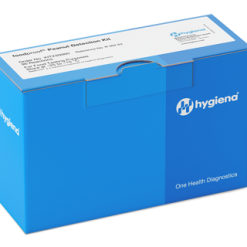
Foodproof Peanut Detection Kit
- Principle: Qualitative real-time PCR for the detection of peanut (Arachis hypogaea) DNA.
- Kit Format: Real-time PCR kit (64 reactions).
- Assay Time: Approximately 100 minutes (excluding DNA extraction).
- Sample Preparation: DNA is extracted from food samples using a suitable DNA extraction method prior to real-time PCR analysis.
- Limit of Detection (LOD): 1 ppm peanut (in rice flour matrix); equivalent to 0.2 peanut genome equivalents.
- Storage: Store at -15 to -25°C.
- Application: Qualitative detection of peanut DNA in food products. The kit also supports quantitative analysis when used with Allergen RM 800 reference material and performs well in challenging matrices such as chocolate, ice cream, and cereals.
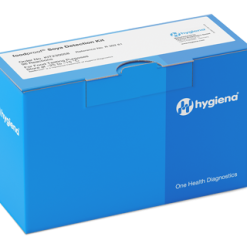
Foodproof Soya Detection Kit
- Principle: Qualitative real-time PCR for the detection of soybean (Glycine max) DNA.
- Kit Format: Real-time PCR kit (64 reactions).
- Assay Time: Approximately 100 minutes (excluding DNA extraction).
- Sample Preparation: DNA is extracted from food samples using a suitable DNA extraction method prior to real-time PCR analysis.
- Limit of Detection (LOD): 0.1 ppm soybean DNA.
- Storage: Store at -15 to -25°C.
- Application: Qualitative detection of soybean DNA in raw materials and processed foods. The kit also supports quantitative analysis when used with Allergen RM 800 reference material.
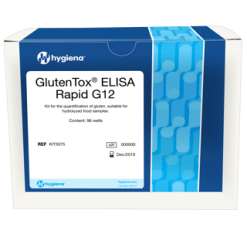
GlutenTox ELISA Rapid G12
- Principle: Quantitative Sandwich ELISA using proprietary G12 and A1 monoclonal antibodies targeting the immunotoxic 33-mer gluten peptide.
- Plate Format: 96-well ELISA microplate (96 reactions).
- Assay Time: Approximately 60 minutes.
- Sample Preparation: Rapid extraction using UGES extraction solution, suitable for a wide range of food and environmental samples.
- Limit of Detection (LOD): 0.4 ppm gluten.
- Quantification Range (LOQ): 1.2–200 ppm gluten.
- Storage: Store at 2–8°C.
- Application: Quantitative determination of gluten in raw materials, processed foods, and environmental samples. Detects gluten from wheat, barley, rye, and oats and supports gluten-free labeling compliance with FDA, Codex Alimentarius, and EU regulations.
GlutenTox Pro Surface
- Celiac disease is an autoimmune disorder that damages the small intestine, causing villous atrophy and impairing the absorption of essential nutrients such as proteins, lipids, carbohydrates, minerals, and vitamins. The disease is triggered by an inappropriate immune response to gluten—a mixture of proteins found in cereals such as wheat, barley, rye, and, to a lesser extent, oats. This immune response may lead to diarrhea, vitamin and mineral deficiencies, anemia, and osteoporosis. Celiac disease can affect individuals of all ages.
- GlutenTox Pro Surface is a rapid immunochromatographic assay for the detection of gluten on environmental surfaces.
- Assay Time: 10 minutes.

GlutenTox® Home (5 Tests)
- Principle: Qualitative Lateral Flow Immunochromatographic Assay using the proprietary G12 monoclonal antibody specific for the immunotoxic 33-mer gluten peptide.
- Test Format: Lateral flow cassette.
- Assay Time: Less than 20 minutes (results in approximately 10 minutes).
- Sample Preparation: Simple extraction and dilution procedure using the supplied reagents; no laboratory equipment required.
- Limit of Detection (LOD): Adjustable detection threshold of 5 ppm or 20 ppm gluten.
- Storage: Store at 15–25°C.
- Application: Qualitative detection of gluten in foods, beverages, and selected oral care products. Designed for home use by individuals with celiac disease or those following a gluten-free diet.
GlutenTox® Pro (AOAC-RI Approved)
- GlutenTox Pro is a rapid, user-friendly immunochromatographic assay for the detection of gluten, which is harmful to individuals with celiac disease, in food products and on environmental surfaces. The assay has been AOAC-approved for both food matrices and environmental surface testing. It is recommended for consumers, commercial kitchens, and food manufacturing facilities, with the flexibility to select different gluten detection threshold levels according to testing requirements.
- Assay Time: 10 minutes.
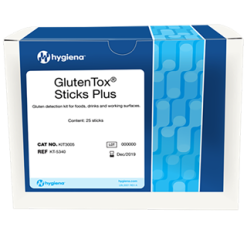
GlutenTox® Sticks Plus (25 Tests)
- Principle: Qualitative lateral flow immunochromatographic assay using the proprietary G12 monoclonal antibody specific for the immunotoxic 33-mer gluten peptide.
- Test Format: Lateral Flow Sticks.
- Assay Time: Approximately 10 minutes.
- Sample Preparation: Rapid extraction using UGES Extraction Solution, suitable for a wide variety of food, ingredient, rinse water, and environmental samples.
- Limit of Detection (LOD): 2 ppm gluten.
- Storage: Store at 2–8°C.
- Application: Rapid qualitative detection of gluten in raw materials, processed foods, rinse water, and environmental surface samples for allergen monitoring and gluten-free verification.
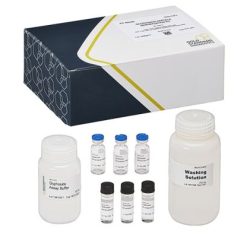
Glyphosate Derivatization Kit, Magnetic Particle ELISA
A sample preparation kit used to prepare and process samples before Glyphosate testing using the Magnetic Particle ELISA method.

Glyphosate Derivatization Kit, Microtiter Plate ELISA
A sample preparation kit used to prepare samples before Glyphosate testing using the Microtiter Plate ELISA method.

Glyphosate Dipstick Control Solution – Mid Detection Range
A control solution used to check and compare Glyphosate dipstick test results at the mid detection range.
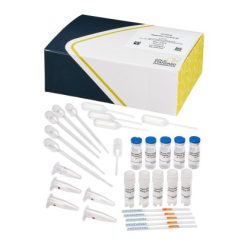
Glyphosate Dipstick, 5 Tests
The Glyphosate Dipstick is a rapid test designed for the detection of Glyphosate. The test uses a dipstick format and provides a visual result through the appearance of colored lines.

Glyphosate ELISA AOAC Test Kit
The Glyphosate ELISA AOAC Test Kit is an immunoassay for the quantitative and sensitive screening of Glyphosate in whole grain durum wheat, whole grain oats, oat groats, dried yellow peas, and dried red lentils.
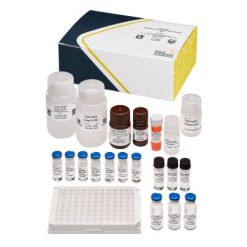
Glyphosate ELISA Plate and Derivatization Kit
The Glyphosate ELISA Plate and Derivatization Kit is an immunoassay designed for sensitive quantitative screening of Glyphosate in various sample matrices. The kit uses a direct competitive ELISA format and includes materials and reagents required for Glyphosate derivatization and analysis.
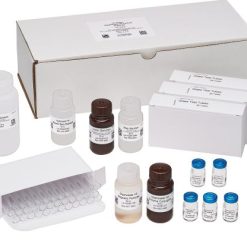
Glyphosate Magnetic Particle ELISA
The Glyphosate Magnetic Particle ELISA is a magnetic particle immunoassay for the detection and quantitation of Glyphosate in water samples, including groundwater, surface water, well water and tap water
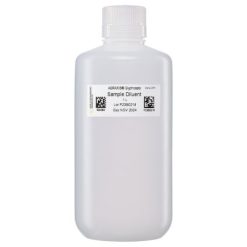
Glyphosate Sample Diluent, 1 L
A sample diluent used for sample preparation and dilution during Glyphosate testing.

Glyphosate, Clean-up Reagent, 2.5 g
A reagent used for sample clean-up and preparation prior to Glyphosate analysis.
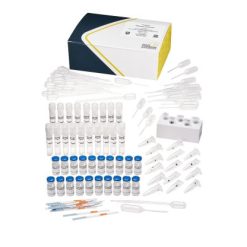
Glyphosate, Dipstick, 20 Tests
The Glyphosate Dipstick is a rapid immunochromatographic test designed for the qualitative screening of Glyphosate in water and food samples. The 20-test kit is identified by product code 500095.
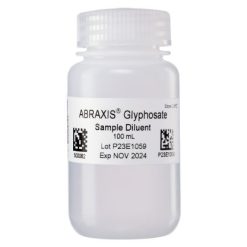
Glyphosate, Sample Diluent, 100 mL
A solution used for the dilution of samples and controls for Glyphosate immunoassays

I’Screen CAP, ELISA, 96 Tests
An ELISA test kit for the quantitative detection of Chloramphenicol in various sample matrices including honey, eggs, urine, water, milk, plasma, muscle tissue, yoghurt and seafood

I’Screen CORTICO, ELISA, 96 Tests
An ELISA test kit for the quantitative detection of corticosteroids in urine, liver, muscle, milk and feed samples.

I’Screen SEM Rapid, ELISA, 96 Tests
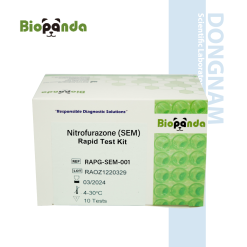
A rapid ELISA test kit for the quantitative detection of SEM (semicarbazide), a metabolite of Nitrofurazone, in seafood, bovine and swine muscle, and honey.
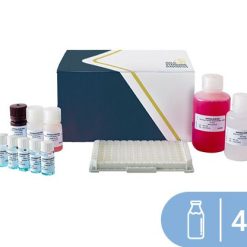
I’Screen SULFA, ELISA, 96 Tests
An ELISA test kit for the quantitative detection of sulfonamides in muscle, egg, milk, honey and feed.

Microcystins/Nodularins DM, Seawater Sample Treatment Solution, 45 Tests
A sample treatment solution for the preparation of brackish water or seawater samples prior to analysis using Eurofins Abraxis Microcystins DM ELISA.
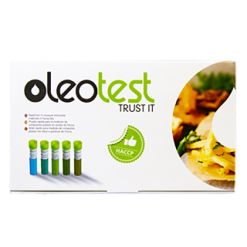
Oleotest Oil Test
- Principle: Colorimetric assay for measuring Total Polar Compounds (TPC) in frying oils.
- Test Format: Rapid oil quality test kit (10 tests).
- Assay Time: Approximately 2 minutes.
- Sample Preparation: Immerse the test tube directly into hot frying oil (≥60°C), wait for color development, and compare with the supplied 5-level color chart.
- Detection Threshold: 5-level color scale indicating oils exceeding 24–25% Total Polar Compounds (TPC).
- Storage: Store at room temperature in a dry place away from direct sunlight.
- Application: Rapid assessment of frying oil quality in restaurants, food processing plants, hotels, catering services, and HACCP programs. Suitable for sunflower, soybean, corn, peanut, palm, coconut, and rice bran oils; not recommended for olive oil.

Oleotest Oil Test (50 test)
- Principle: Colorimetric assay for measuring Total Polar Compounds (TPC) in frying oils.
- Test Format: Rapid oil quality test kit (50 tests).
- Assay Time: Approximately 2 minutes.
- Sample Preparation: Immerse the test tube directly into hot frying oil (≥60°C), wait for color development, and compare with the supplied 5-level color chart.
- Detection Threshold: 5-level color scale indicating oils exceeding 24–25% Total Polar Compounds (TPC).
- Storage: Store at room temperature in a dry place away from direct sunlight.
- Application: Rapid assessment of frying oil quality in restaurants, food processing plants, hotels, catering services, and HACCP programs. Suitable for sunflower, soybean, corn, peanut, palm, coconut, and rice bran oils; not recommended for olive oil.
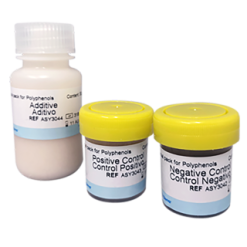
Polyphenols Pack
- Principle: Extraction reagent that neutralizes interference from polyphenols and tannins, improving gluten recovery prior to analysis.
- Format: Extraction reagent pack.
- Preparation Time: Used during sample preparation without significantly increasing assay time.
- Sample Preparation: Add Polyphenols Pack during extraction of polyphenol-rich samples before testing with GlutenTox® assays.
- Storage: Store according to the manufacturer’s instructions.
- Application: Optimizes gluten extraction from challenging matrices such as cocoa, chocolate, coffee, tea, wine, legumes, berries, and other polyphenol-rich foods. Reduces the risk of false-negative gluten results.

Quinolones Residue ELISA Test Kit
Rapid ELISA Kit for Quinolones Residue Testing is a biological immunoassay kit designed for the quantitative analysis of quinolones in samples.
Samples: Muscle, fish, shrimp, eggs, honey.
Testing Time: 75 minutes
Packaging:
HU0050004 – 96 wells (12 strips x 8 wells).

Rapid ELISA Kit for AHD Residue Testing
Rapid ELISA Kit for AHD Residue Testing is a biological immunoassay kit designed for the quantitative analysis of 1-aminohydantoin (AHD), a metabolite of nitrofurantoin, in samples.
Samples: Seafood, beef, pork, honey
Testing Time: 45 minutes
Packaging:
HU0050037 – 96 wells (12 strips x 8 wells)

Rapid ELISA Kit for AOZ Residue Testing
Rapid ELISA Kit for AOZ Residue Testing is a biological immunoassay kit designed for the quantitative analysis of 3-amino-2-oxazolidinone (AOZ), a metabolite of nitrofuran furazolidone, in samples.
Samples: Seafood, beef and pork, eggs, honey.
Testing Time: 45 minutes
Packaging:
HU0050034 – 96 wells (12 strips x 8 wells).

Rapid ELISA Kit for SEM Residue Testing
Rapid ELISA Kit for SEM Residue Testing is a biological immunoassay kit designed for the quantitative analysis of nitrofurazone metabolite semicarbazide (SEM), a metabolite of nitrofuran nitrofurantoin, in samples.
Samples: Beef and pork, crustaceans, honey.
Testing Time: 45 minutes
Packaging:
HU0050036 – 96 wells (12 strips x 8 wells).
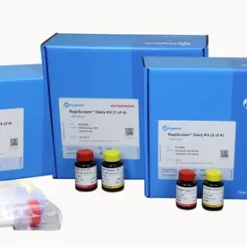
RapiScreen™ Dairy Kit – Rapid Microbial Screening Kit for Commercial Sterility Testing
RapiScreen™ Dairy Kit is a rapid microbial screening kit that uses ATP bioluminescence technology to confirm the absence of bacteria, yeasts, and molds in shelf-stable dairy and plant-based products. Used with the Innovate™ System, it delivers objective commercial sterility results in as little as 2–7 days, significantly reducing testing time compared with conventional culture methods.
SENSISpec Penicillin ELISA, 96 Tests
A sensitive ELISA test kit for the quantitative determination of Penicillin in milk and shrimps.

Streptomycin Residue ELISA Test Kit
Rapid ELISA Kit for Streptomycin Residue Testing is an immunoassay kit designed for the quantitative detection of streptomycin and dihydrostreptomycin.
Samples: Honey, royal jelly, meat, milk.
Testing Time: 80 minutes
Packaging:
HU0050013 – 96 wells (12 strips x 8 wells).

Sulfonamides Residue ELISA Test Kit
Rapid ELISA Kit for Sulphonamides Residue Testing is a biological immunoassay kit designed for the quantitative analysis of sulphonamides in samples.
Samples: Muscle (tissue), eggs, milk, honey, animal feed.
Testing Time: 75 minutes
Packaging:
HU0050003 – 96 wells (12 strips x 8 wells).

Tetracycline Residue ELISA Test Kit
Tetracycline Residue ELISA Test Kit is an immunoassay kit for quantitative screening and analysis of Tetracycline.
Samples: Meat, milk, milk powder, cheese, shrimp, and honey.
Testing Time: 80 minutes
Packaging:
HU0050014 – 96 wells (12 strips x 8 wells).

Trenbolone Residue ELISA Test Kit
Trenbolone Residue ELISA Test Kit is an immunoassay kit designed for the quantitative detection of Trenbolone.
Samples: Meat, urine.
Testing Time: 105 minutes
Packaging:
HU0050022 – 96 wells (12 strips x 8 wells).

Tylosin Residue ELISA Test Kit
Tylosin Residue ELISA Test Kit is a biological immunoassay kit designed for the quantitative analysis of tylosin in samples.
Samples: Animal tissues (muscle, liver, and kidney), honey, milk, and urine.
Testing Time: 50 minutes
Packaging:
HU0050020 – 96 wells (12 strips x 8 wells).

UltraSnap® Surface ATP Test
UltraSnap® is an all-in-one surface ATP test designed for rapid cleaning verification using ATP bioluminescence technology. When used with Hygiena luminometers, it provides objective sanitation results in approximately 10 seconds, making it ideal for hygiene monitoring in food processing, healthcare, pharmaceutical and other industries.

Washing Buffer 20X, 50 mL
A 20X concentrated washing buffer supplied as a supplementary common reagent for ELISA testing procedures.

β-agonists (Clenbuterol) Residue ELISA Test Kit
β-agonists (Clenbuterol) Residue ELISA Test Kit is a biological immunoassay kit designed for the quantitative analysis of β-agonists in samples.
Samples: Urine and serum from humans, cattle, and horses, eyes, liver, feed, milk, and milk powder.
Testing Time: 45 minutes
Packaging:
HU0050018 – 96 wells (12 strips x 8 wells).