
 English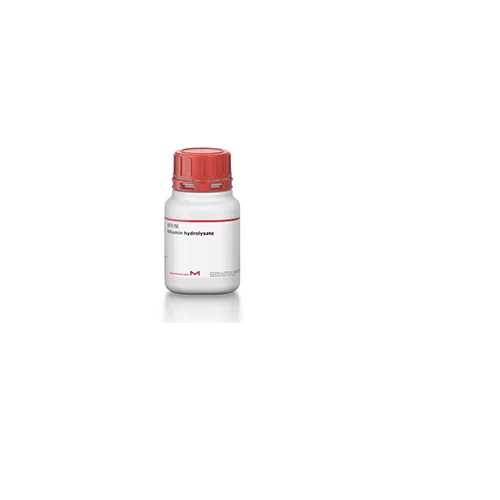
General description
Ovalbumin is the major constituent of egg white protein produced in the hen′s oviduct, particularly in the magnum tissue.[1] This glycoprotein represents about 54% of the total proteins of egg albumin.[2] Ovalbumin is a member of the serine protease inhibitor (SERPIN) family.[1]
Application
Albumin hydrolysate has been used:
to study its effects on the content and profile of volatile aroma compounds of various food products[3]
to determine the degree of interaction of free or included form of hydroxycinnamic and chlorogenic acids (CHAs) with egg ovalbumin and to analyze the stability of interactions during proteolysis[4]
as a supplement in various food types to evaluate their bioaccessibility after food processing as well as after in vitro enzymatic hydrolysis[5]
In a rather unusual application, albumin hydrolysate enhanced ethanol production during fermentation by Saccharomyces sake (sake yeast). In media supplemented with albumin hydrolysate, final alcohol concentration was 60% higher than without supplementation. The effect is believed to be due to enhanced alcohol tolerance of cells grown in supplemented medium.[6]
Biochem/physiol Actions
Ovalbumin contributes to the formation of egg white.[1] It elicits various biological activities, such as antihypertensive, anticancer, antimicrobial, antioxidant, and immune-modulation.[7]