
 English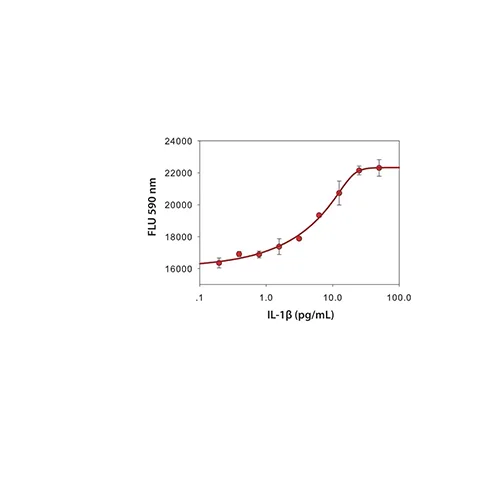
General description
Interleukin-1β (IL-1β) cytokine is generated by monocytes, dendritic cells, macrophages and keratinocytes. Pro-IL-1β, an IL-1β precursor undergoes proteolytic cleavage to produce its active form of 17 kDa.[1]
Application
Interleukin-1β from mouse has been used:
as a proinflammatory agent,[2] to induce inflammatory signaling cascades mediated cellular damage[3]
to study its effect on fetuin A-induced inflammatory response in podocyte[4]
to check its effect on the expression of mitogen-activated protein kinase 4 using 3T3-L1 adipocytes[5]
Biochem/physiol Actions
Interleukin-1β (IL-1β) is a potent inflammatory cytokine,[1] and mediates inflammation through proinflammatory molecules: cyclooxygenase-2 (COX2) and nitric oxide.[6] IL-1β release is stimulated by injury and increased levels are observed in response to severe pain.[7] It has its main function in T-cell activation, antigen recognition and T-helper cell 17 cell development. IL-1β is also responsible for the formation of IL-17 and IL-22 by nature killer T (NKT) cells and NK cells. It is known to induce inflammation in psoriasis and rheumatoid arthritis.[1] IL-1β controls intercellular adhesion molecule-1 expression. It is significantly associated with bone damage and vascular injury.[8]
Physical form
Lyophilized from 0.2 μm filtered solution in 10mM Sodium Citrate, pH 4.0
Analysis Note
The biological activity is measured by the dose-dependent stimulation of murine D10G4.1 cells.
Other Notes
The two closely related agents, Interleukin-1α (IL-1α) and Interleukin-1β (IL-1β) bind to the same cell surface receptor, elicit nearly identical biological responses and yet share 25% homology in their amino acid sequence.