
 English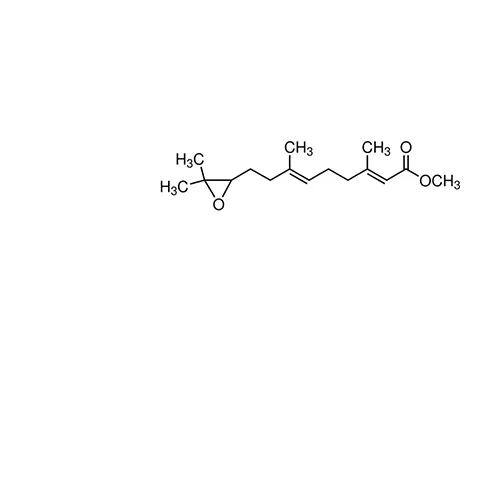
General description
Research Area: Cell Signaling
Juvenile hormone III (JH III) is the most prevalent juvenile hormone (JH) found in insects.[1]
Application
Juvenile hormone III has been used to:
study the effect of juvenile hormone on mictic (sexual) female production of the rotifer Brachionus plicatilis Muller[2]
study the effect of juvenile hormone on head GB19811 (putative Takeout/juvenile hormone binding protein) mRNA levels in adult honeybees[3]
study the effect of juvenile hormone on gonadotropic and physiological functions in bumblebee Bombus terrestris[4]
Biochem/physiol Actions
Controls the larval metamorphosis of insects, including the retention of juvenile characteristics.
JHBPs (JH-binding proteins) protect JH (juvenile hormone) from JH esterase- and epoxide hydrolase-mediated degradation. They also help in delivering JH to target tissues.[5]Juvenile hormones(JHs) are a group of acyclic sesquiterpenoids, and in some insect lineages, the farnesol backbone of these compounds undergoes chemical modification to produce a homologous series of hormones. JH is essential for insect development and reproduction in every aspect. It plays a key role in metamorphosis and caste determination in social insects. It modulates behavior, polyphenism, larval and adult diapause, and ovarian development.[1] The sesquiterpenoid backbone of juvenile hormone III (JH III) is biosynthesized through the classical mevalonate (MVA) pathway in cockroaches.[6]