
 English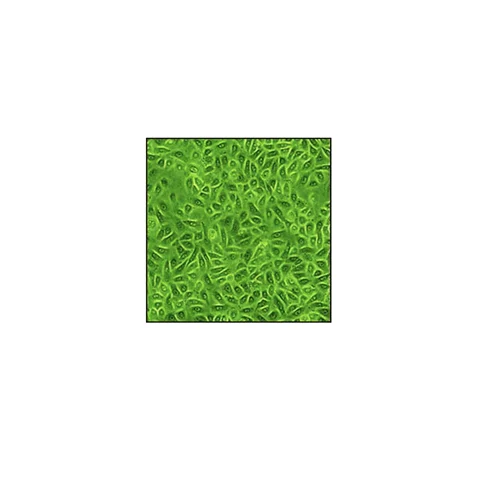
General description
Lot specific orders are not able to be placed through the web. Contact your local sales rep for more details.
REK from Cell Applications, Inc. provide a suitable model system to study many aspects of epithelial function and disease, particularly those related to skin biology and toxicology. It was shown that TGFβ1 treatment decreased c-Myc mRNA in REK which, taken together with the TGFβ1-induced growth arrest exhibited by keratinocytes and opposite results obtained in other cells, suggests a correlation between c-Myc mRNA expression and the mitogenic response (Nakai, 2008). Additionally, REK were used to demonstrate that pathological increases in keratinocyte sodium channels Nav1.1, Nav1.6, and Nav1.8 expression may contribute to pain by increasing epidermal ATP release, resulting in excessive activation of P2X receptors on primary sensory axons (Zhao, 2008). REK were also used to demonstrate that laminin 332 deposition is inhibited by ionizing radiation and, in combination with slower keratinocyte migration, can contribute to the delayed wound healing of irradiated skin (Jourdan, 2011).
Application
Skin biology and toxicology, wound healing, artificial skin, cell proliferation, migration, UV light response.
Biochem/physiol Actions
Skin
Preparation Note
Primary culture, >500,000 cells in Rat Keratinocyte Basal Medium that contains 10% FBS and 10% DMSO
These epithelial cells proliferate well when thawed and plated from cryopreservation, but they do not plate and proliferate after trypsinization
Please refer to the RDF Culture Protocol.
Analysis Note
Each lot was tested for proper morphology, Population Doublings, Negative for HIV, Hepatitis B, Hepatitis C, mycoplasma, bacteria, and fungi.
Other Notes
Rat Keratinocyte Basal Medium that contains 10% FBS and 10% DMSO